A good science fiction story should be able to predict not the automobile but the traffic jam.
-Frederik Pohl
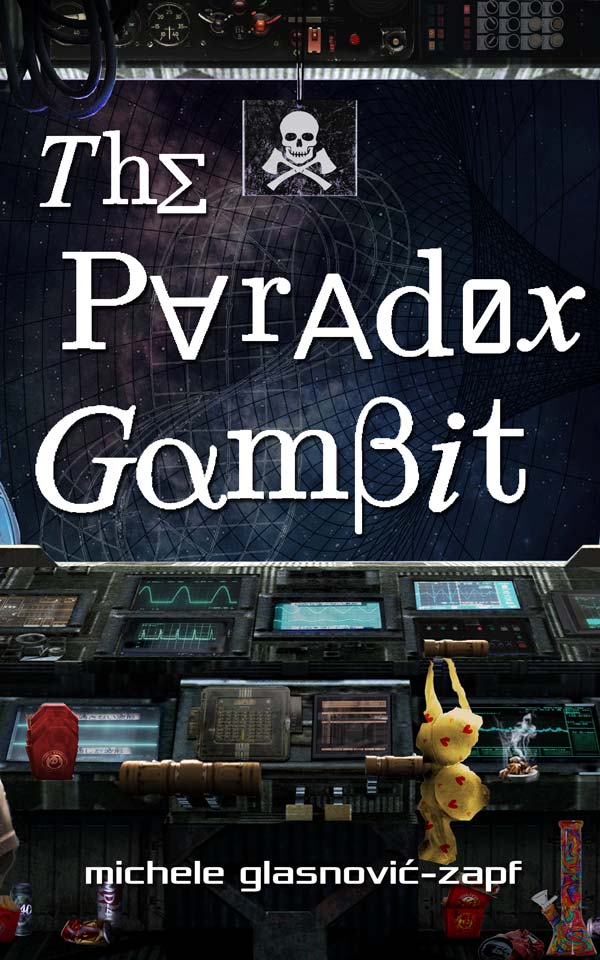
My first novel, "The Paradox Gambit," is now available for a free download here.
Check out the first chapter here.
---
Target acquired. Weapons locked.
Candace Kumari's eyes twitched as they focused on the target. She gritted her teeth, her thumb hovering over the red button. She only had to press it, and the offending ship would be blasted into molecules.
The proximity alert wailed again. "Destroy the target, Sergeant Kumari," said the voice from her shuttle's beige control panel.
Candace winced. She couldn't do it.
"Destroy the target before it damages the Za'toon ship."
"What about my ship?" Candace glanced around the Terran Starforce shuttle. Cracked panels with dimly flickering LEDs lined the cockpit. Doors hung misaligned on the cabinets. The cargo bay door was broken and needed to be shoved open. The only thing Candace found acceptable in the shuttle was her Dowbisco Fishsticks mascot—a fuzzy, yellow, turd-like plushie wearing a futbol jersey. It sat strapped to the threadbare plexileather copilot's seat.
"Are you experiencing stress, Sergeant? Would you like me to schedule an appointment with a therapist?" the tinny voice asked.
"No, I'm fine." She ran her hands over her prickly buzz-cut hair and wished she still had something there to pull.
"Then destroy the target."
Candace growled. Her last day at work, and they were going to make it painful right to the end. She took a breath and pushed the button.
A burst of orange plasma billowed from the twin cannons atop the shuttle. As the plasma ate through the abandoned vessel's hull, Candace saw the paradox drive inside. The cylindrical steel housing marked it as a rare second generation generation drive—only a few thousand left in existence. Every bone in Candace’s body twitched. This was a crime, a murder.
"Half a million Fijacoin. Gone. Just like that."
That was more than she earned in a year. She had asked her superiors countless times if she could salvage the junked ships rather than destroying them, but their response was always the same: "We must protect the Za'toon freighters at all costs." In other words, fuck off and do your job, Candace.
"The path to Earth is clear, Sergeant. Please escort the Za'toon ship to hangar three at Dandelion Field Siberia Five."
"Yes, of course, thank you." She rolled her eyes. Unbelievable. The military had drilled the habit of being polite to computers into her.
Candace guided the shuttle northward over the Pacific Ocean. She gazed at the sun-drenched clouds scraping the mountains in the distance. Flying was one of the rare pleasures she had. Piloting a paradox drive was one of the few jobs that could not be automated away, and the sole reason she had joined the military. As she approached the Russian coastline, the golden glitter of thousands of square kilometers of dandelions blinded her. She reached for the aviator sunglasses perched atop her head, and slid them over her eyes. In her rear-view monitor, she saw the hulking transport's landing thrusters lowering. The ship began its descent.
"All clear?" Candace asked into the ship's commlink.
"All clear," a raspy voice said from the Za'toon ship.
"Ten four. Have a nice day," Candace smiled, then killed the commlink, "And good riddance." She sped her shuttle away.
Twenty minutes to Australia. Candace turned on the autopilot and leaned back to catch a precious few minutes of sleep.
"Wake up. Wake up. Wake up. Approaching Melbourne now."
Bastard alarm clock. Candace’s first inclination was to smash it, but instead she just rolled over, shut it off, and leaned her head against the window as her eyes slowly peeled open. Just past the sea's gray shoreline, littered with broken chunks of bony white coral, were the crumbling ruins of Melbourne. The shuttle flew over them toward the beehives beyond. The 3-D printed matrix of hexagonal flats stood eighteen stories tall, surrounded by fields of whip-like, green Nutrisoy stems. Candace steered the shuttle to a pockmarked road half a kilometer away from home.
A dust cloud lifted around Candace’s feet as her thick-soled, standard issue boots hit the ground. She grabbed a canvas bucket hat from her knapsack and put it on, shading her eyes against the blazing sunlight. Candace squinted, annoyed, but an unfamiliar emotion quickly took its place—hope. Out there were eight other planets and dozens of moons, all of which promised something better than life on filthy fucking Earth in the year 2101.
Candace flicked a switch and a ramp slid out of the shuttle's bay. Inside, a bulky haulbot rumbled as its engine booted up. She pulled a datapad from her pocket, tapped on it, and the bot rolled out on its six rubbery wheels. There were two arms on the front, one of which Candace grabbed and used to hoist herself atop the mechanical beast. On its already baking-hot roof, she stretched out a moment of relaxation.
That was shattered by a scream in the distance.
“Give it back!”
"For fuck's sake…" Candace jolted up and scanned for the source of her annoyance. Two people, one of whom was much larger than the other, yanked at opposite ends of a bicycle. Finally, the bigger one shoved the bike into the smaller one, sending him tumbling to the ground. Then the bigger kid and the bike were off, peeling down the road away from the beehives.
“Typical.” Candace sighed and stuck the haulbot's left arm out. It knocked the cyclist off, and the bike clattered to the ground. She picked up the thief with the right claw, grabbed the bike with the left one, and tucked it into the haulbot's cargo space. The young woman clamped in the claw screamed and kicked, because she couldn’t even have the decency to shut up when she fucked up. Candace put on her headphones to drown out the noise.
A few hundred meters away, a child sat in the road with his head in his hands, crying. A kid crying or the teenager screaming? It was hard to tell which was worse, which meant she had to get rid of both, quickly, so she could get back to sunning herself. She hopped off the haulbot, slid the cargo door open, and grabbed the bike.
“Idiot,” Candace said to the kid. “Don’t let anyone take your bike. Ever. You got that?”
The kid grabbed the bike and said, “Uh, sorry, ma’am,” and backed away from her quickly.
"Yeah, yeah, no worries… sir." Candace snorted. Twenty-three years old was way too young to be called ma'am by anyone but her underlings. The kid was about to hop on his bike, but Candace barked in the same voice she used with her grunts in the military. “Halt. You’re just going to get it stolen again. How many fish sticks did you have to eat for that thing?”
“Uhh…”
“Answer me, worm!” Candace barked.
“Si… si… six hundred seventy two, ma’am.” The kid’s bony knees looked like they were about to give out.
Candace grimaced. Tears welled up in the kid’s eyes.
“Can you put me down now?” the teenager screamed. Dammit. Now there are tears involved. Candace tapped her datapad and thrashed the thief around in the claw. One of her shoes flew off.
“Shut it,” Candace growled.
The teenager agreed this was the best course of action.
Candace stopped the claw’s motion, and turned to the kid. She forced a smile, which made her facial muscles protest at being forced into anything but the usual resting bitch face.
"I'm sorry. I didn't mean… Anyhow, look, I earned a bike like that once, too, and it saved my life. Do you know how many experimental Salisbury steaks I had to eat to earn it?"
He shook his head.
"A lot. I stopped counting at five hundred… And the fuckers still wouldn't tell me what kind of animal a Salisbury was!"
The boy twitched. "Yuck."
She eyed the boy. "You take care of that bike. It'll free you one day from this dump. And if anyone tries to take it from you…” Candace pulled a butterfly knife out of her pocket and tossed it to the kid. “Use that. Just put it in any of their fleshy parts.”
Candace patted him on the shoulder with the haulbot's right claw, almost knocking him over, then continued toward the beehives.
The teenager cleared her throat. "Ma'am, can you put me down now?"
"Don't call me ma'am."
Candace put her headphones back on. On the outskirts of town, she found a dumpster behind one of the Dowbisco testing centers. She twisted the haulbot's arm above the opening, opened the claw, and dropped the girl inside. She slammed the lid shut, and placed a large rock on top of it.
"Scum." That bike had cost her countless hours of sampling every atrocity from Dowbisco's food labs and answering scores of surveys. It was all worth it, though. After she had finally earned that bike, Candace spent most of her days exploring the forgotten highways beyond the Dowbisco campus. She had wandered past ghost towns of office complexes, dry gas pumps, and abandoned shopping malls whose parking lots were filled with burned out cars. She had gotten a lost a lot that bike, but it was ultimately what saved her from getting lost.
The haulbot stopped outside of Dowbisco Housing Complex F. She hopped off and headed to the lift. The pale green hallway, shaped out of hundreds of meters of extruded plastic, stank of sweat and piss. The scent was even more concentrated in the lift. She held her breath, rode it up to level seven, and hurried toward her flat.
Candace swiped the implant in her hand over the lock. The door clicked open. The scent of the stale air crept up on her, a sickly sweet stench she had breathed every day of her teenage life. Five years later, it still lingered. The smell was formed of a high note of vanilla Nutrisoy dietary fluid, which was fed via tube into her father's stomach. Its middle note was the pungent odor of sharp chemicals, the cleaning fluid for the body that never moved, save for twitching in a fit of the giggles. Even though the computers had long since been removed, Candace swore she could still smell that low note of ozone they had produced.
She stared at the empty bed where his body had lain for years, only a stain of sweat remaining. Five years ago, the day came when she could mourn no longer. Candace had finally sent him, along with most of their monthly stipend, to where all the lost ones went: the Yumatech hospice for permanent care.
"I can't blame you for getting lost, Dad," Candace said to the empty bed.
Candace had plugged in exactly once at a demo Yumatech had held at the town square. Beyond the walls of her visor spread an infinite world of perpetual pleasure, filled with every virtue and vice one could desire.
"It's better than reality!" shouted the presenters.
That was the day Candace knew she needed a bike. She vowed to never deep dive again.
Her father had only been diving a few days before he was gone. The bed was still empty, but she couldn't look away. Hot tears stung her eyes.
"I miss you, Dad. But I made it. I'm out. After I stop at base and check out, I'm free, and I'm never coming back."
The sun shone through a window at the far end of the hexagonal tube. Out there she could pursue a dream that didn't involve junk food or eternal disconnection from reality. It only took four years in the military to get a set of marketable skills. Out in Solsys, she could put those skills to work doing something other than being a goon for the only other intelligent species in the galaxy.
"What in the fuck, Susan? Strawberry? You got this week's rations in strawberry?"
That sweet nostalgia dissipated.
"Gary, it was all they had left!"
"Dammit, you stupid…"
Candace flung her knapsack on the bed and stormed toward the door. She stomped into the hallway, where a squat middle-aged man screamed at a scrawny woman.
"Is there a problem?" Candace snapped. "I hope so, because you interrupted my pity party for it."
"This ain't your business, bitch." The man turned toward her and froze. "I…I'm sorry, ma'am."
Candace blinked. That was easy. She caught her reflection in the lift door—she still wore her Starforce jacket. Aha. She straightened her shoulders to a tall, powerful stance. There she stood, glowering, while smirking inwardly. The man wrung his hands.
"You'd better be. If I ever catch you hassling someone half your size again, I'll twist your nuts off with a rusty spanner."
"Yes ma'am. And thank you for your service."
The woman smiled weakly. Candace sighed and headed back to her flat. The military bravado routine was bullshit, and normally, she wouldn't stoop to embracing it, but after spending most of her career as a glorified security guard, it'd be nice to use her uniform to do some good for once.
She grabbed a few of her favorite outfits, her journals, and her sketchbooks. She stuffed them in her knapsack and slung it over her shoulder. After retrieving her prized ten speed from the hook above her bed, she wheeled it out to the lift, stepped inside, and held her breath.
Outside the beehive, Candace loaded the haulbot. She climbed atop it and rode down the potholed road. She passed teenagers playing dice in shaded alcoves and old women gossiping as she left the complex.
Candace rolled the haulbot into the cargo bay in the rear of the shuttle. She shoved the cockpit door open and climbed into the pilot's seat.
"Set a course for Lunar Base G-10," Candace said, taking care to hide the glee in her voice. The last thing she needed was a computer reporting an attitude problem back to HQ.
The computer chirped its acknowledgment and the shuttle's engines hummed as they spun up.
As the shuttle lifted off, dust swirled below her. That was the last time she would ever stand on her home planet. This would be the last time she ever saw the clouds, the sea, or the dingoes that roamed the outback.
"Good." Candace scowled.
The sky darkened as she sped toward the upper atmosphere. A smile spread across her face. She giggled, then laughed wildly, with a joy she hadn't felt since she was a child.
"I'm out! I'm out! Out, out, out!" The laughter filled her with hope, happiness, optimism, and smoke. Smoke?
Candace coughed violently and swiveled her seat around. She shoved the plushie out of the copilot's seat and grabbed the fire extinguisher behind it. A panel of red hot metal hurtled into her shoulder, searing clean from her body. A cloud of plasma screamed behind it.
Candace's vision filled with darkness and stars as the flames closed in.
--
Want more? Download the book free:
Or buy it for $0.99 at Amazon
You can also play the game.
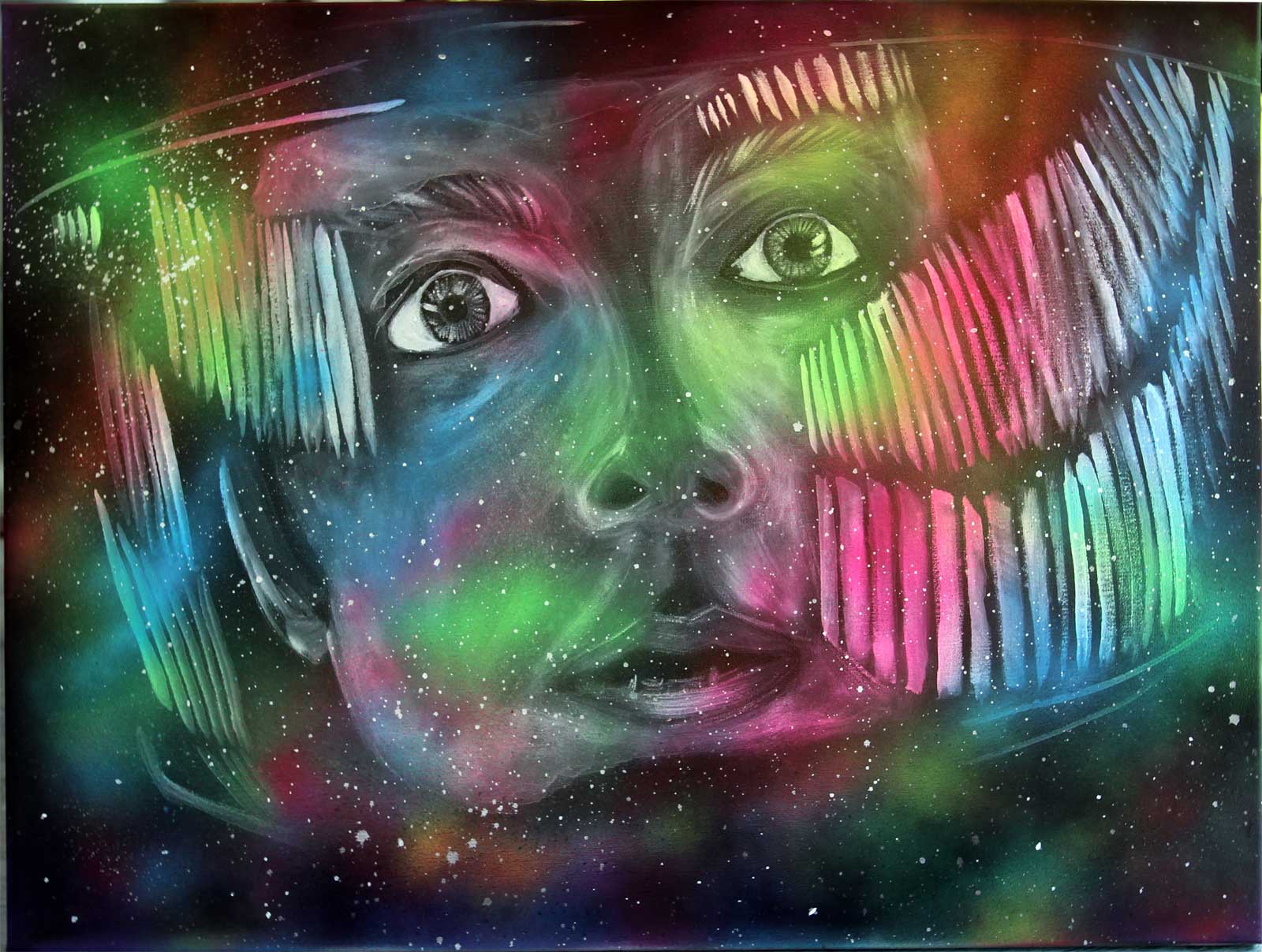
"My God, it's Full of Stars." -- Acrylic and spray paint on canvas, 18" x 24"
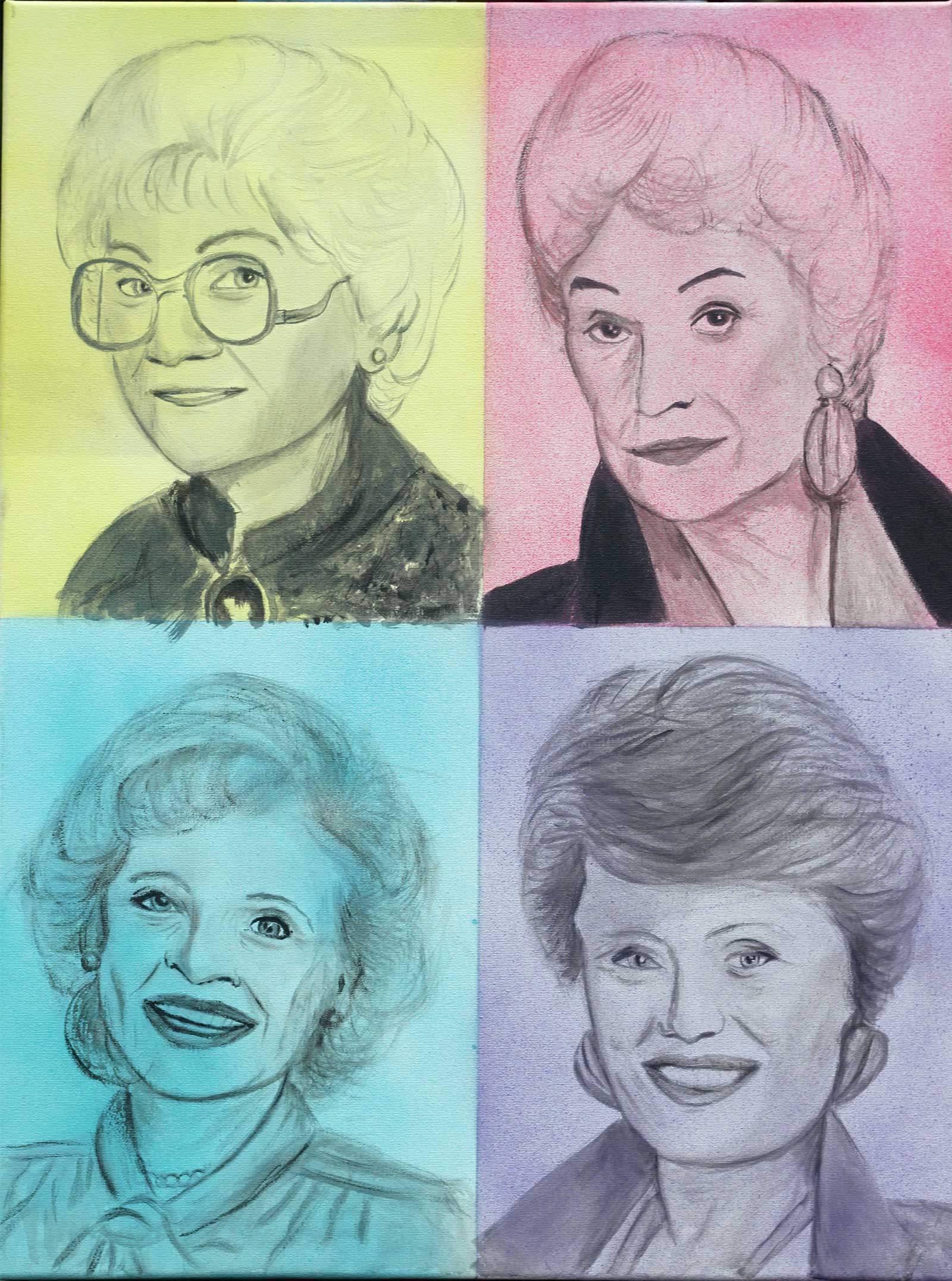
"You've Got A Friend In Me." -- Acrylic and spray paint on canvas, 18" x 24"
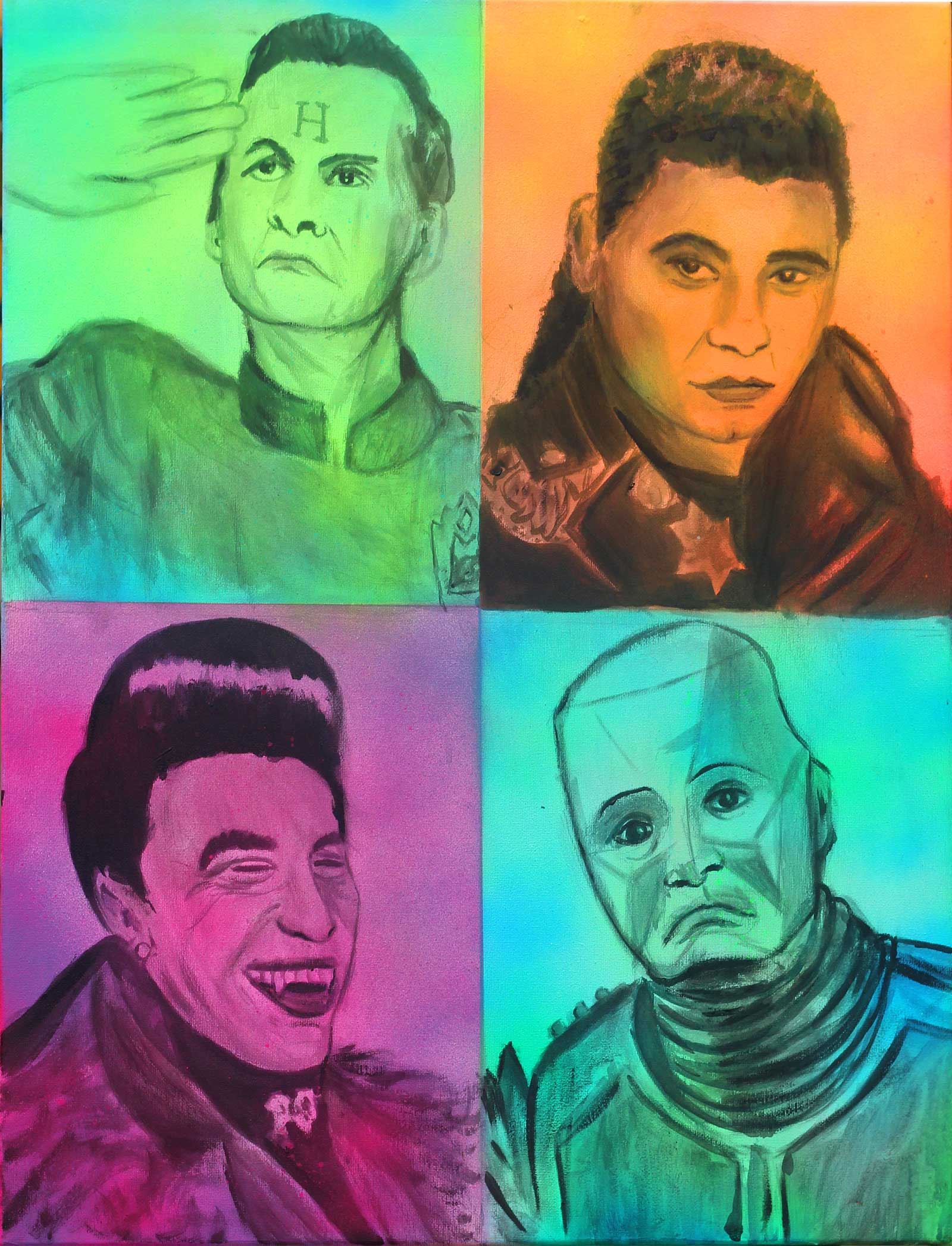
"Smeg Heads" -- Acrylic and spray paint on canvas, 24" x 18"
It's about time I did a painting of my favorite outer space lads, the boys from Red Dwarf. For more Red Dwarf fun, check out my Dave Lister cosplay.
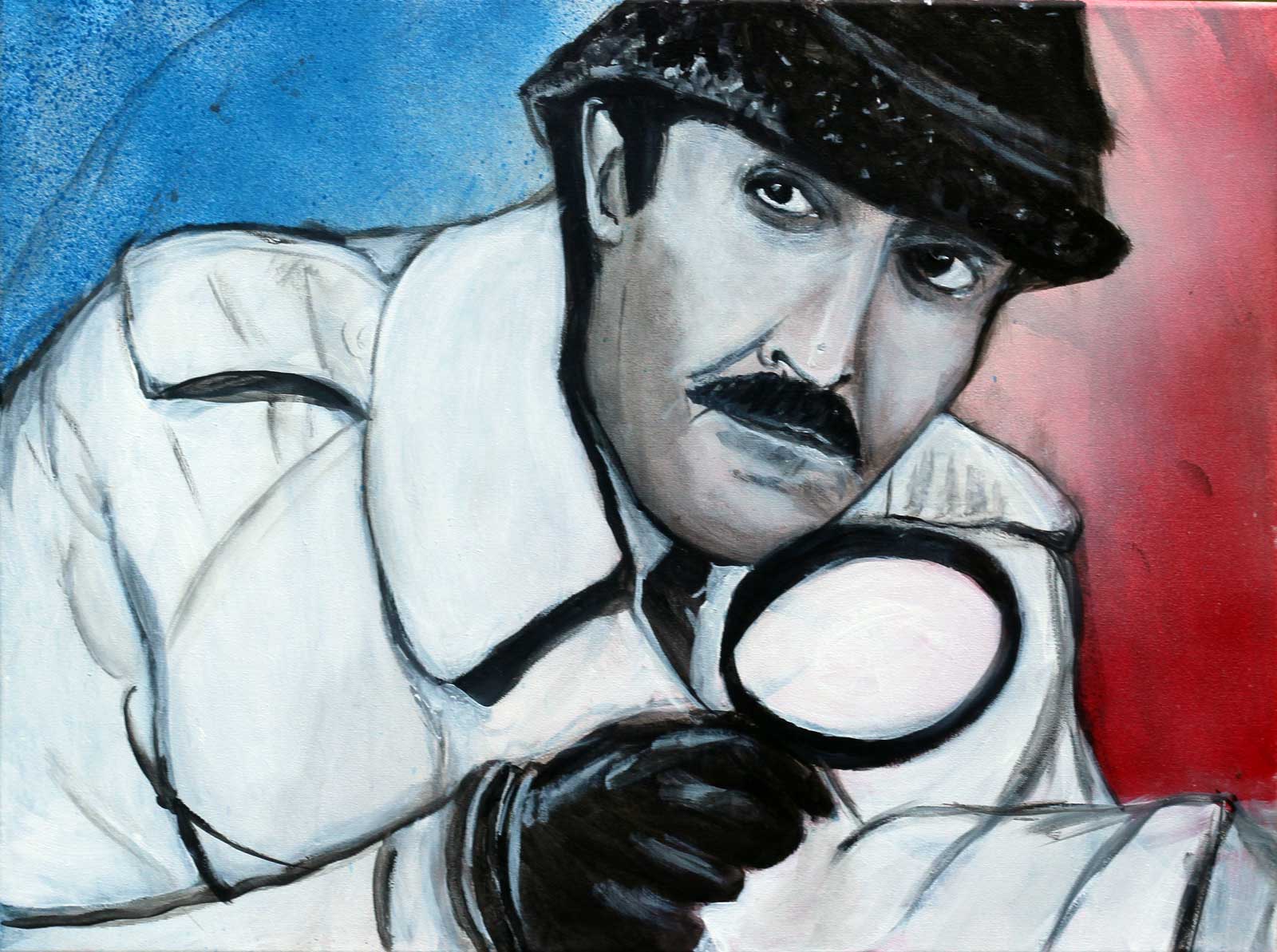
"I Suspect Everyone" - Acrylic and spray paint on canvas, 24" x 18"
It's a gift for my dad, who is a long-time fan of Peter Sellers.
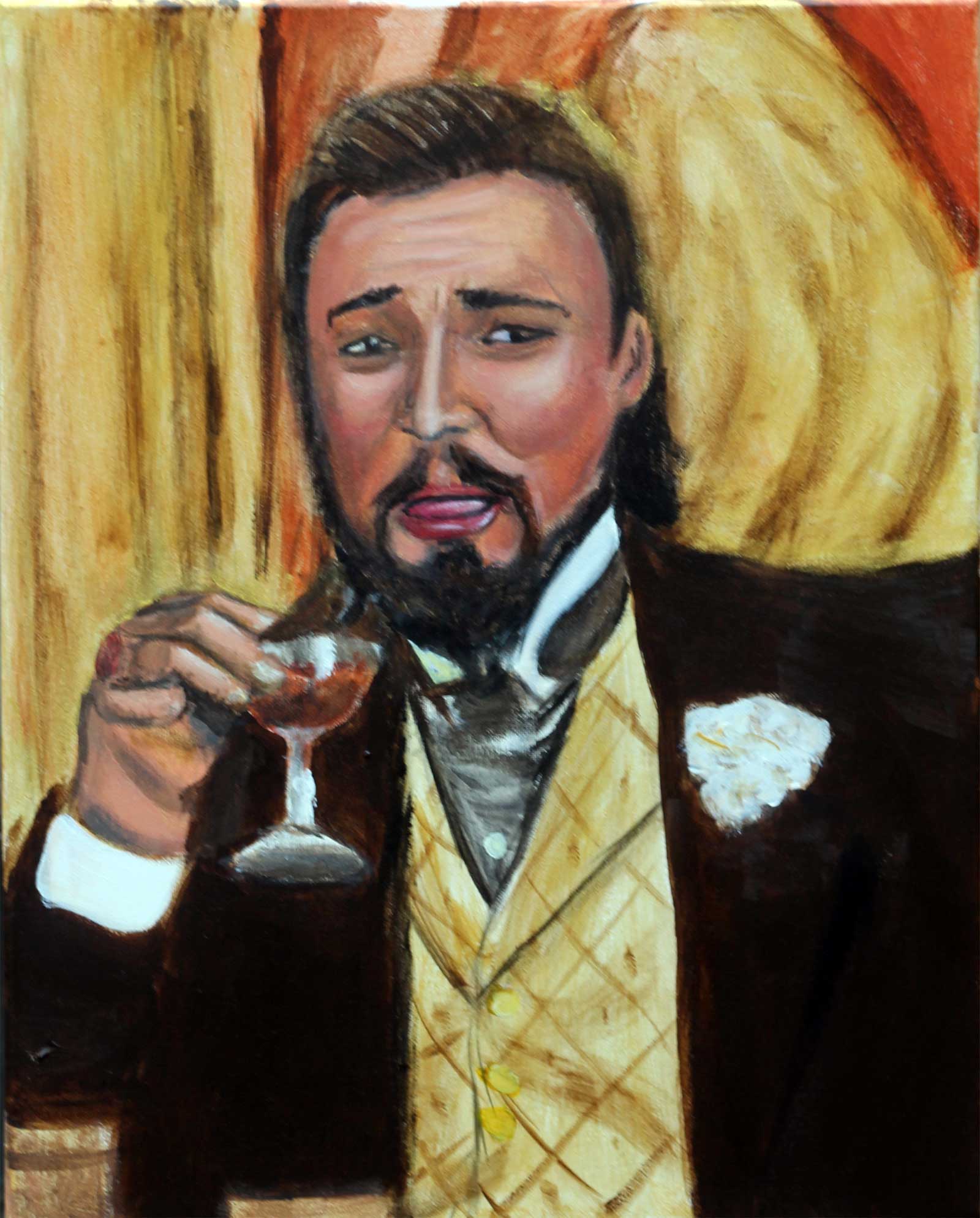
"Burn It To The Ground." - Acrylic and spray paint on canvas, 24" x 18".
One of the best monologues from cinema, and a damn fine thing to share with your Republican family members on Thanksgiving.

"When You Have Imposter Syndrome, But Make Awesome Paintings Anyway." -- Acrylic on canvas, 18" x 24"
This is totally my mood these days.
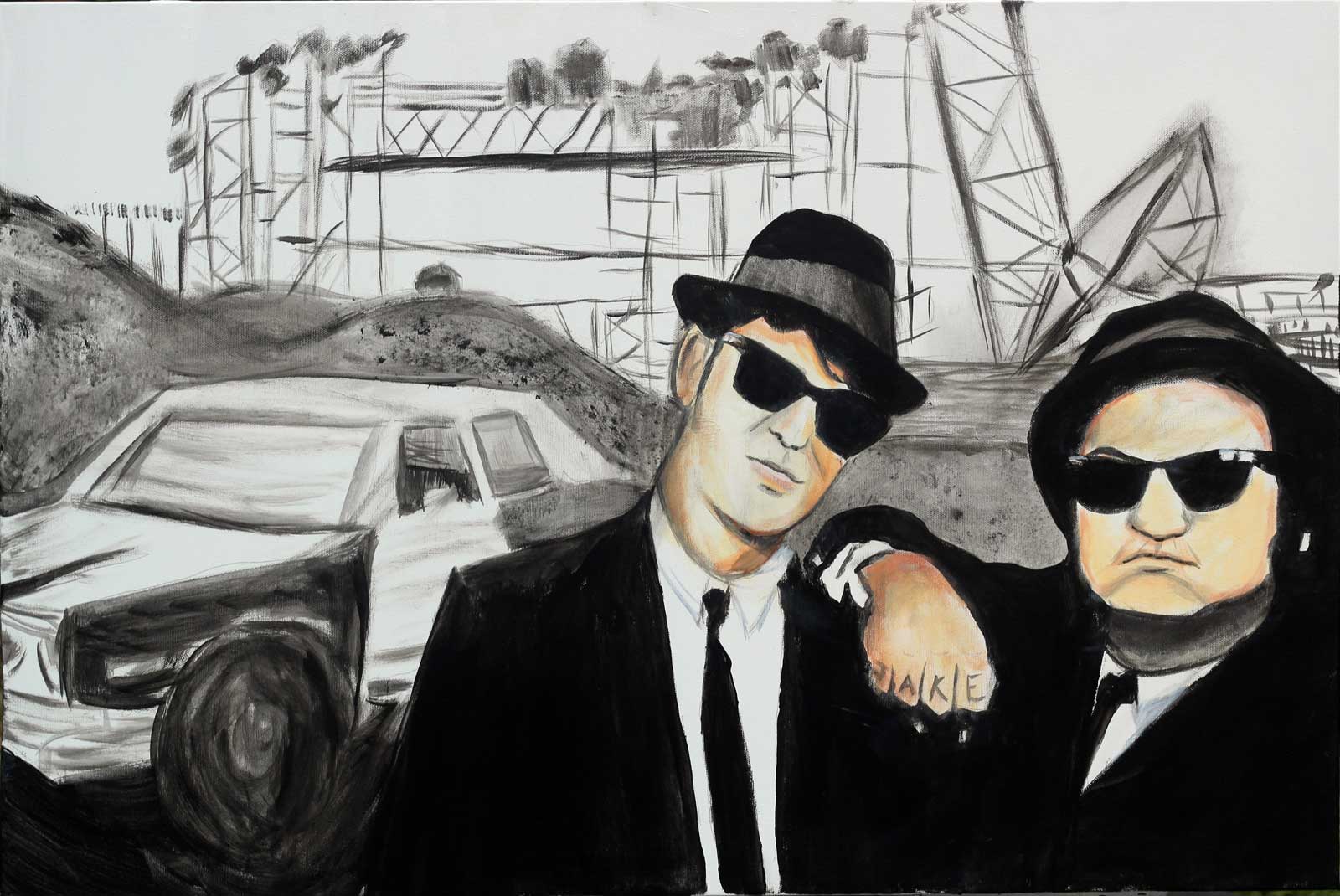
"We're On A Mission From God." -- 24" x 36", acrylic on canvas
"Sweet Transvestite" - 24" x 30", acrylic on canvas

One of film's greatest power couples. 24" x 30", Acrylic on Canvas
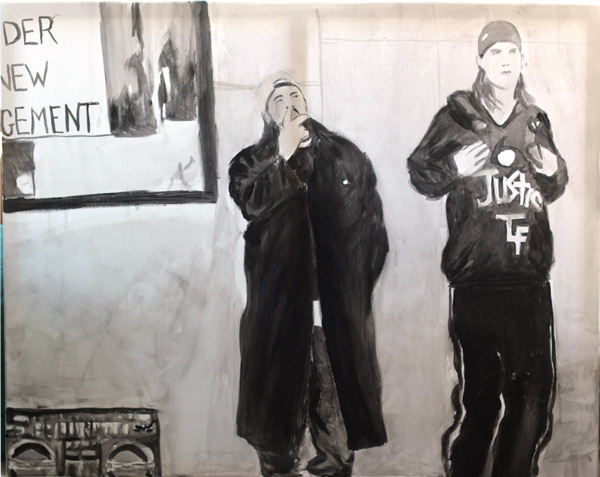
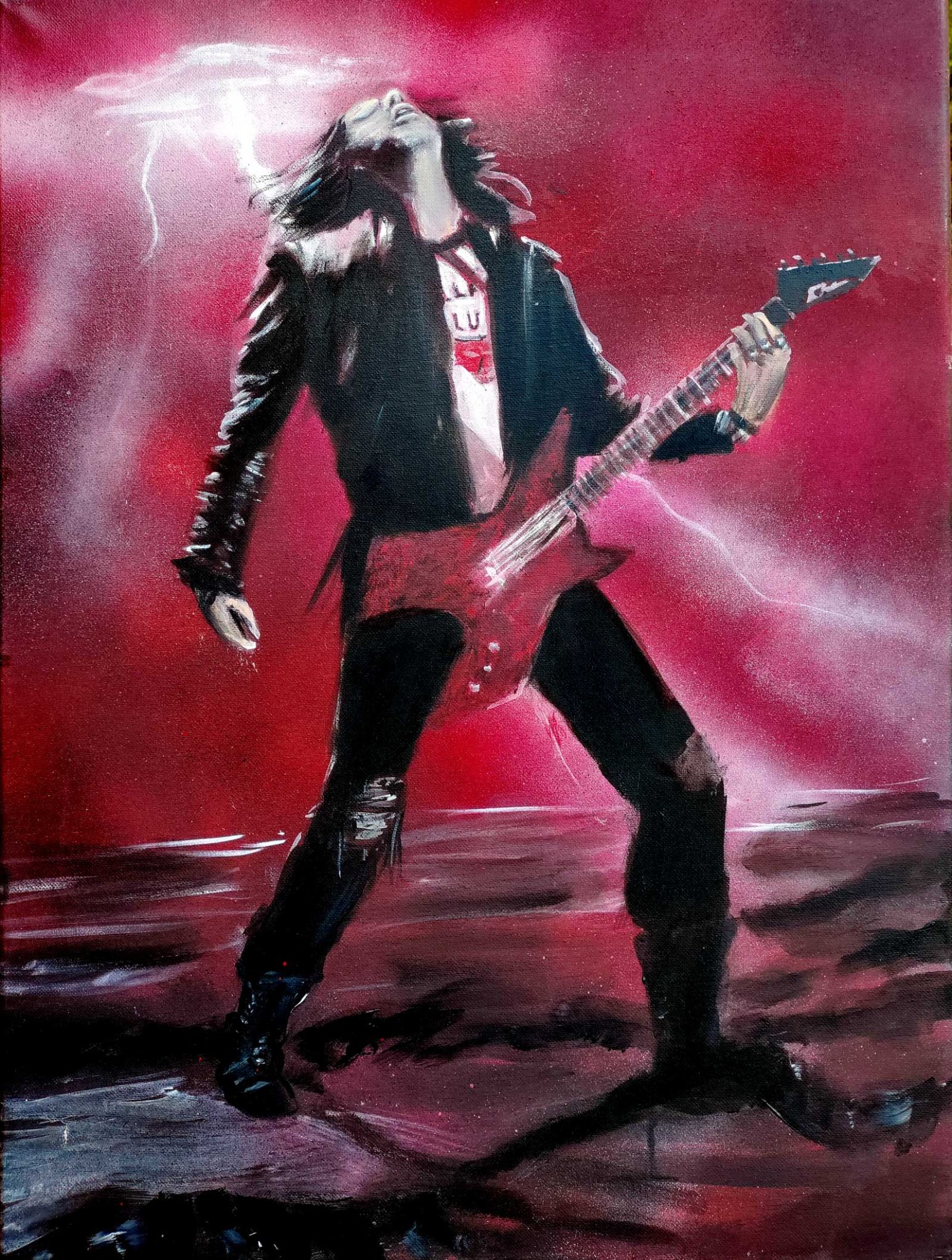
Inspired by one of the most beautiful scenes on the screen that I've seen in a long time. "Master of Puppets" - 18"x24", acrylic and spray paint on canvas.
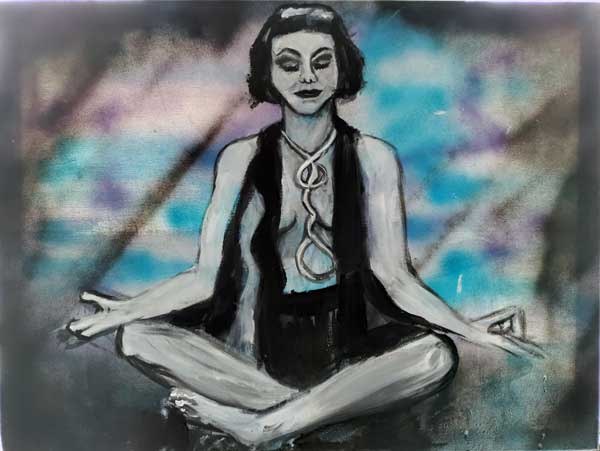
The Witch of King's Cross - Acrylic on canvas - 24" x 18"
Rosaleen Norton is one of the great unsung heroes of the modern Witchcraft revival, and a fascinating person. She was a visionary artist of great talent, and through that, she heard the call of the Old Gods. All the respect. If you want to learn more about her, check out the documentary, "The Witch of King's Cross" on Amazon.

The infamous Aleister Crowley (rhymes with holy.) Acrylic on canvas, 24" x 18"
When I painted this, I grabbed a canvas that I had partially painted, aborted, then re-gessoed with the intent of repainting the canvas. On said canvas, I was originally painting my "Smokey and the Bandit" homage, and I had already named it by writing the name of that painting, "A Complete Lack of Respect for the Law" on it.
Given that Mr. Crowley wrote the Book of the Law, I thought that random happenstance was oddly appropriate.
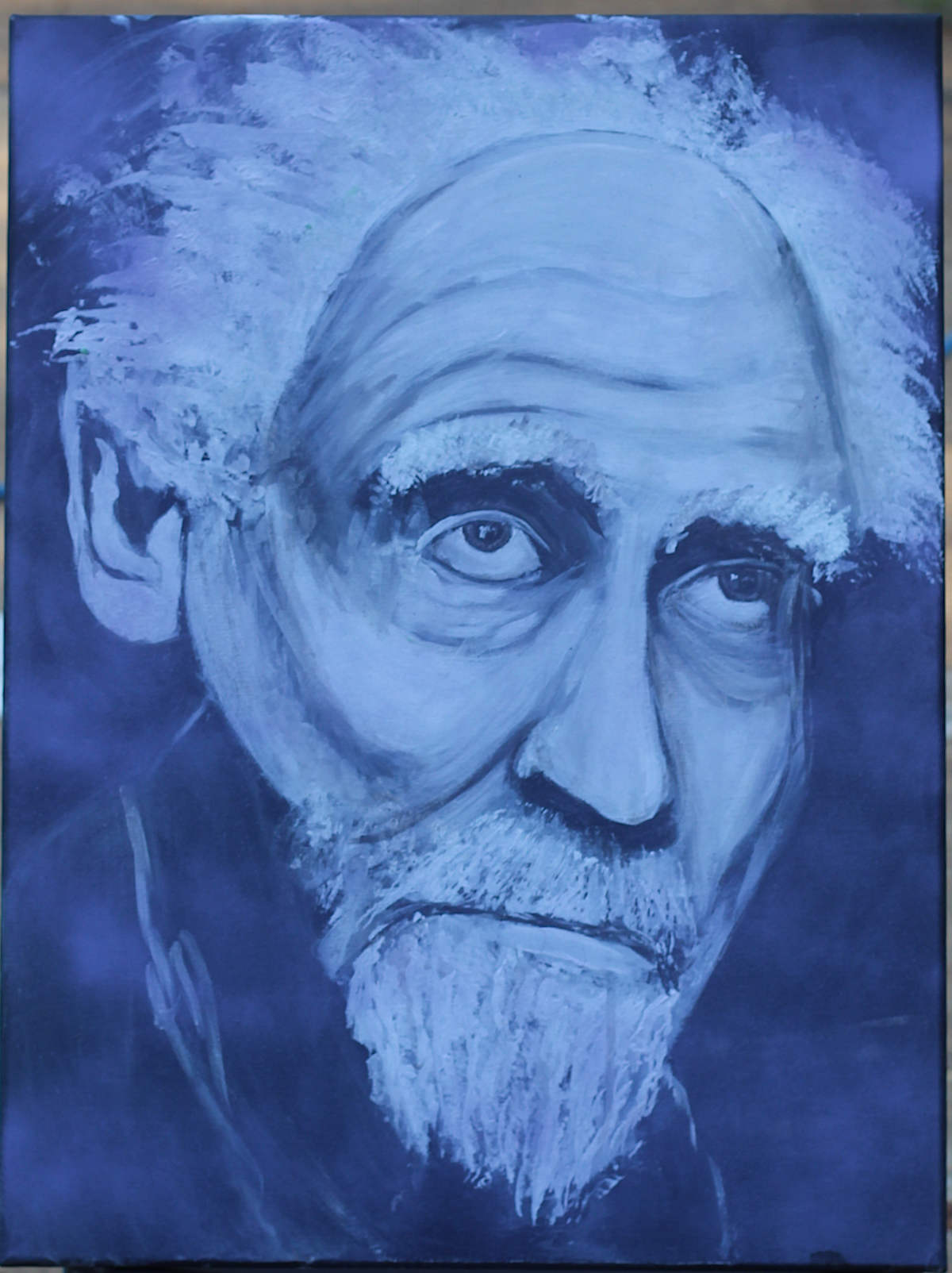
"Witchfather: A portrait of Gerald Brosseau Gardner." Acrylic and spray paint on canvas, 18" x 24"
Since it's October, I'm going to be shifting my artistic focus to painting some of the most famous witches out there. I started with Gerald Gardner, who is often referred to as the father of modern Witchcraft. His pioneering work, started over seventy years ago, opened the doors for witches to come back out of the broom closet.
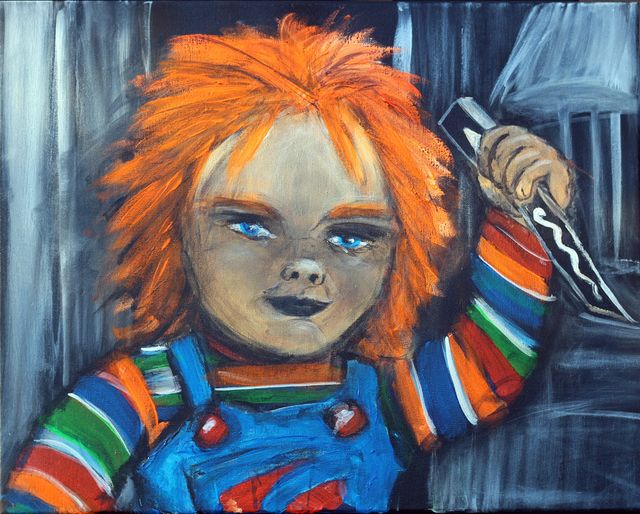
"Wanna Play?" Acrylic on Canvas, 16" x 20"
My husband and I have been binge watching the Child's Play movies. I don't think I've laughed so hard in a long time. "Bride of Chucky," I liked especially. What a sweet, adorable little love story.

"Heaven and Earth: The Gods of Wicca" Acrylic and spray paint on canvas, 24" x 36"
I started "Little Big Earth" as a story I could tell indefinitely, with as many lulz as I feel appropriate. So, I am going to drop a chapter every few weeks -- I wish I had the time to do more, but I just don't -- and hopefully people will enjoy this warped little tale I am spinning.
"Little Big Earth" is and forever will be free.
http://limbopeak.com/index.php/books/little-big-earth/little-big-earth-chapter-1-splash-landing
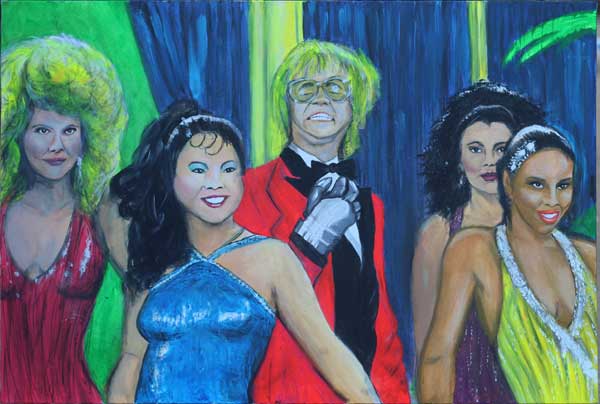
"The Doctor Is In" -- Blacklight reactive acrylic on canvas, 36" x 24"
I painted this for my husband's birthday. The scene is from an obscure early eighties movie called, "Doctor Detroit," starring Dan Akroyd and Fran Drescher. My husband said that he saw this movie when he was a kid and it changed his life. He decided at the tender young age of three that he wanted to be a pimp when he grew up.
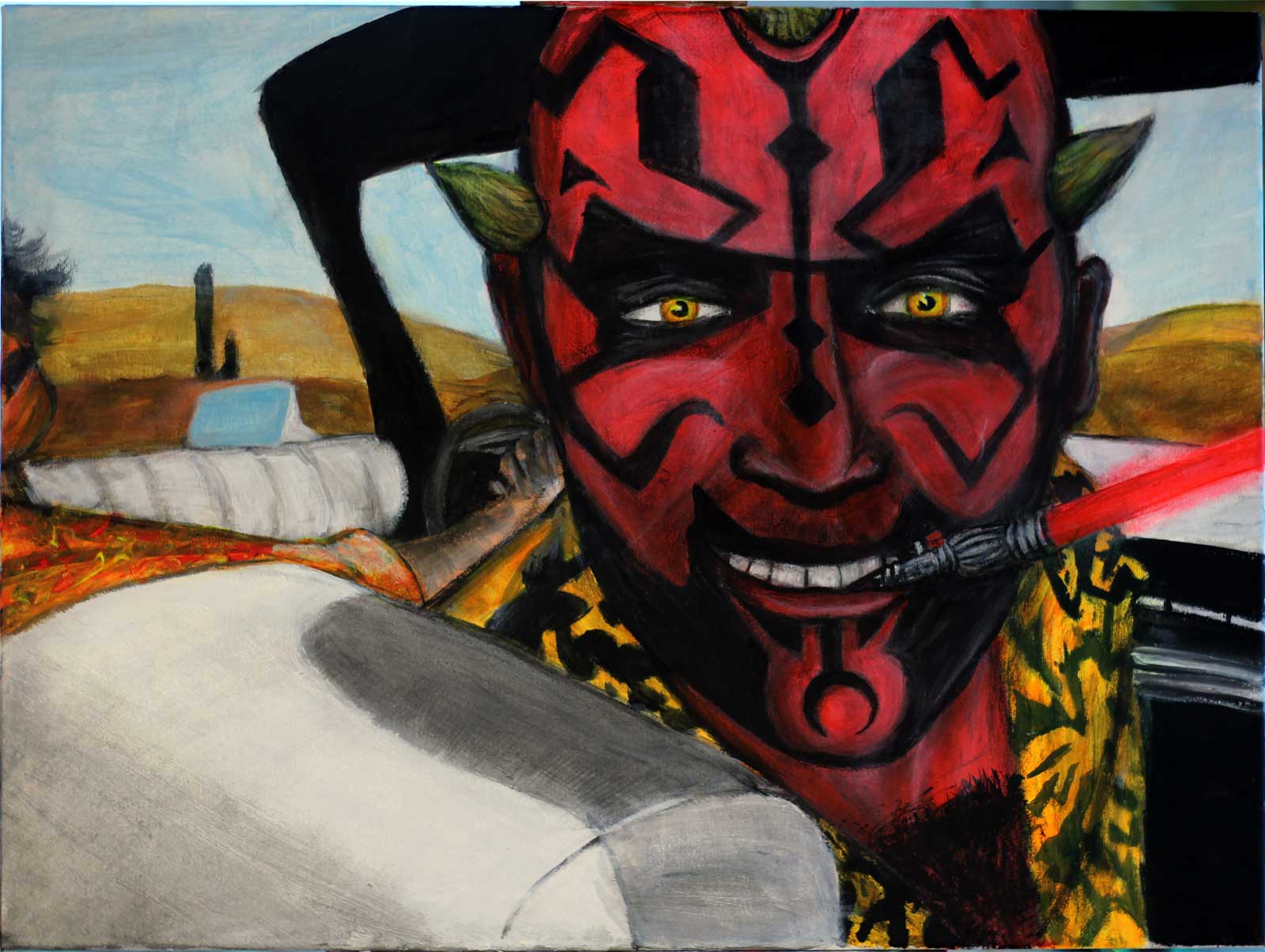
... or "A Long Time Ago in Bat Country." This was a commission for a friend. She gave it to her fiance for his birthday. I couldn't stop laughing the whole time I was working on this.
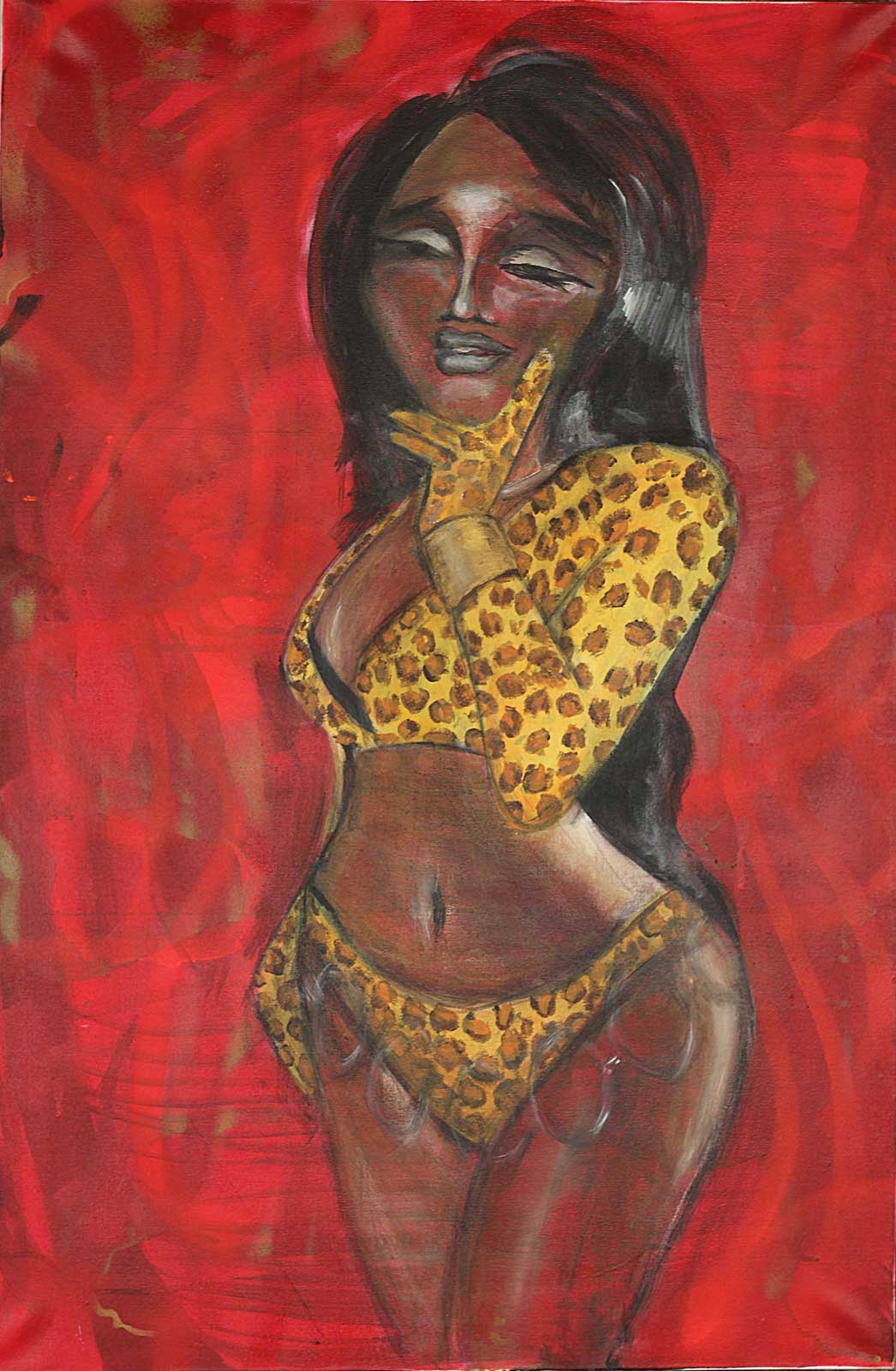
I was going through a bit of a creative slump when it came to art. It occurred to me: just paint what you like. I like hot babes, and I like Megan Thee Stallion's music. Here's my cupcake interpretation of her from her album, "Fever."
Also, if you haven't seen Megan's newest video, you really need to. It's called "Thot Shit" and it's my new favorite thing on the internet.
Megan Thee Stallion has the distinct honor of being the first person who I have painted more than once.